
Sex Offender Checks in Monmouth County
The New Jersey State Police State Bureau of Identification manages the New Jersey Sex Offender Internet Registry, also known as the Megan's Law Registry. It is the main public channel for Monmouth County. The public interface can search a known name or explore a place. County and local law-enforcement agencies support registration and compliance work, while the Monmouth County Prosecutor evaluates risk and seeks a court's tier and notification decision.
Start with the official registry rather than a commercial list. A public record reflects only information approved for Internet disclosure. The source can change as an address, tier, compliance status, or court order changes. Match several facts before drawing a conclusion, since a shared name is not a sound identity match. A blank result is just as limited.
Why Monmouth Registry Results Have Gaps
New Jersey uses risk tiers to control notification. Tier 1 is low risk and generally limited to law-enforcement notice, so those records usually do not appear on the public Internet registry. Statutorily eligible Tier 2 profiles may be published, subject to exclusions. Tier 3 supports broad notification and Internet publication.
This means no result does not prove no registration. It may mean the spelling or place filter missed the record, the registrant falls within a nonpublic group, or the listing changed under a court order. Public registry scope also differs from parole or Community Supervision for Life and Parole Supervision for Life. Those supervision systems answer a different question from Internet publication.
How to Search the New Jersey Sex Offender Internet Registry
Open the New Jersey Sex Offender Internet Registry and read its terms before searching. Use a name when identity is known. Use geographic controls when the goal is community awareness in Monmouth County. The current vendor labels should control if they differ from a saved screen.
- Open the official registry and accept the conditions and lawful-use terms.
- Choose a name search or enter an address, city, ZIP, or Monmouth County filter.
- Switch between map and list views when checking a place, then compare identifying details in the result list.
- Open the public profile and review its date-sensitive address, offense, tier, and status fields.
| Field or Control | Type | Required | Notes |
|---|---|---|---|
| Search by Name | Tab and form | Search-dependent | First and last name; spelling matters |
| Geographic or Address Search | Form and map | No | Searches a location when the live tool offers it |
| City | Text or dropdown | No | Narrows the place within New Jersey |
| ZIP | Five-digit text | No | Narrows a local area |
| County | Dropdown | No | Select Monmouth from the New Jersey counties |
| Map or List | View control | No | Changes geographic presentation |
| Search or Reset | Button | As used | Runs or clears the selected query |
Monmouth Registry and NSOPW
The U.S. Department of Justice National Sex Offender Public Website is the official cross-state layer. It is useful when a person may have moved, when a search area crosses state lines, or when more than one jurisdiction needs to be checked.
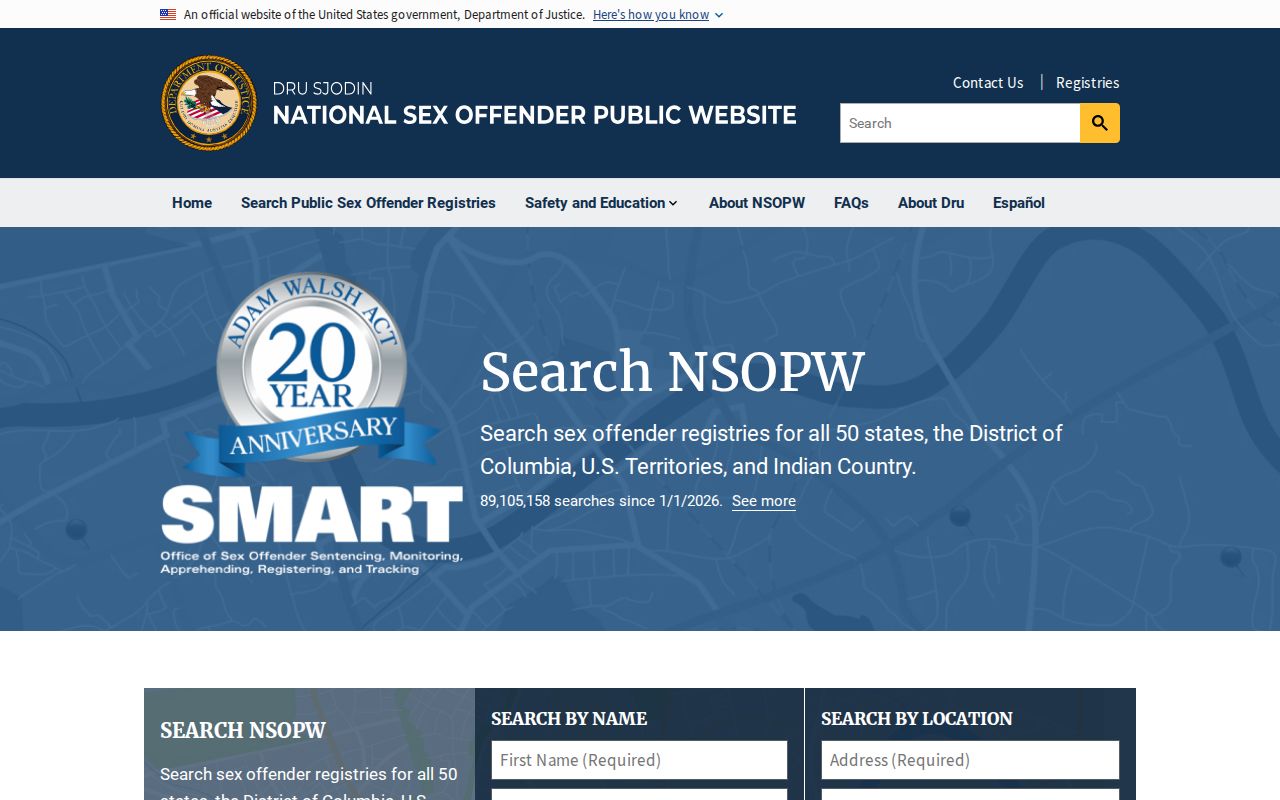
NSOPW gathers public jurisdiction data, but the New Jersey registry remains the direct source for a Monmouth County profile and the state's publication rules.
A federal custody search is different. The Federal Bureau of Prisons inmate locator finds people in federal custody by register number or identity fields. Federal criminal cases for the area run through the U.S. District Court for the District of New Jersey, which is distinct from both custody and registry systems.
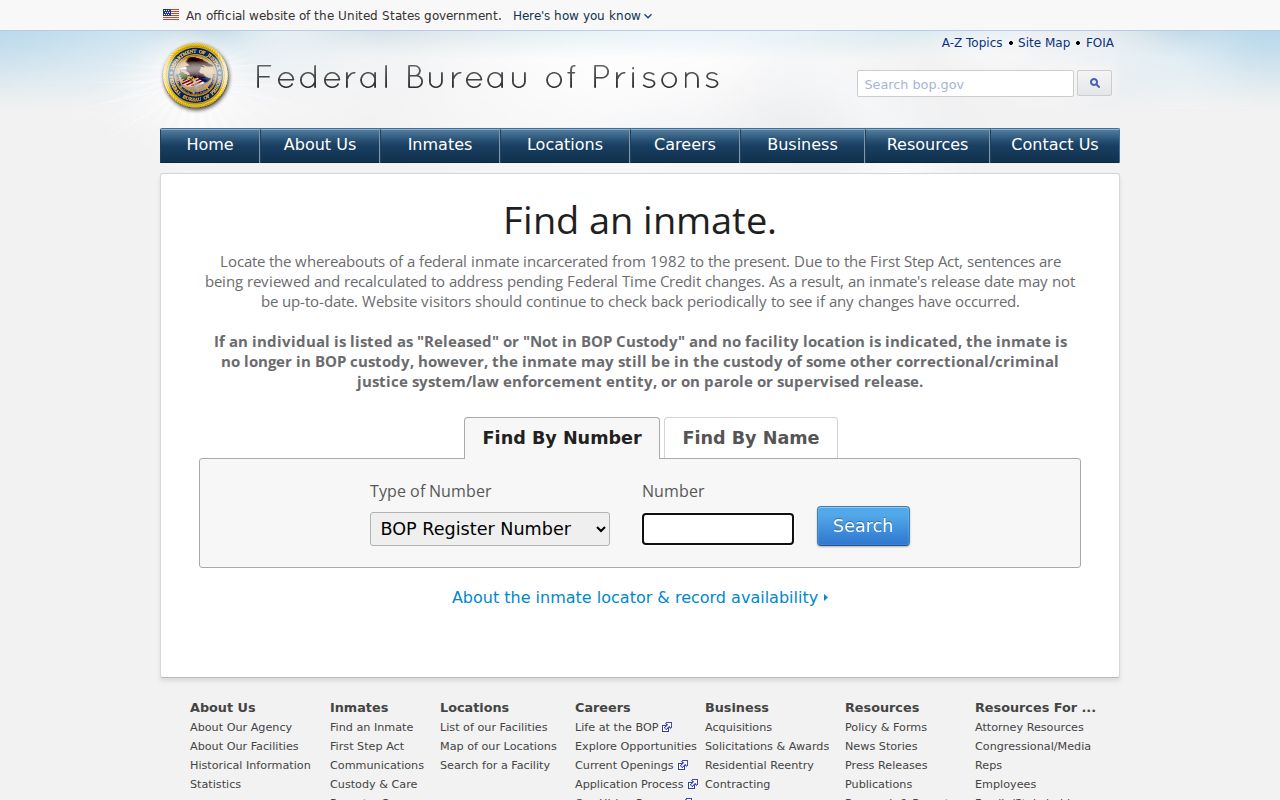
The BOP result does not establish current New Jersey registry status, tier, address, or compliance. It should never replace the registry search.
Inside a Registry Profile
A public profile combines identifying facts, published location data, and offense information. Not every field appears for each person. Treat photos, age, physical descriptors, aliases, and location as a set rather than relying on the name alone. Address and vehicle fields may change, while the offense and conviction fields describe past court events.
| Name and Aliases | Registered name plus any alternate names approved for display |
|---|---|
| Photo and Description | Primary or added photos, age or birth information, sex, race, height, weight, hair, eyes, and identifying marks where published |
| Registered Address | Published residence, municipality, Monmouth County, ZIP, and map position when authorized |
| Offense Record | Qualifying offense, jurisdiction, and conviction date available to the public |
| Risk Tier | The New Jersey notification tier when displayed |
| Registration Status | Compliance or reporting information and agency directions where the profile provides them |
| Other Public Fields | Scars, marks, tattoos, vehicle details, and further photos when available |
A registry profile is not the same as a court jacket. Anyone trying to understand the filed charges and disposition should use the Monmouth County criminal court case channels. The profile should remain a narrow source for public registry status and community safety information.
Monmouth Tier Decisions and Supervision
The Monmouth County Prosecutor applies the Attorney General Registrant Risk Assessment Scale and asks a court to determine tier and notification. The tier estimates risk for notice purposes. It does not set a three-part registration duration schedule like the federal SORNA tiers, and it should not be read as a sentence label. Current local court access and contact information comes from the Monmouth Vicinage.
The New Jersey State Parole Board Sex Offender Management Unit supervises people subject to Community Supervision for Life or Parole Supervision for Life. Registry publication and parole supervision can overlap, but neither one proves the other. The State Parole Board's offender information routes identify where custody, parole, and registry questions belong.
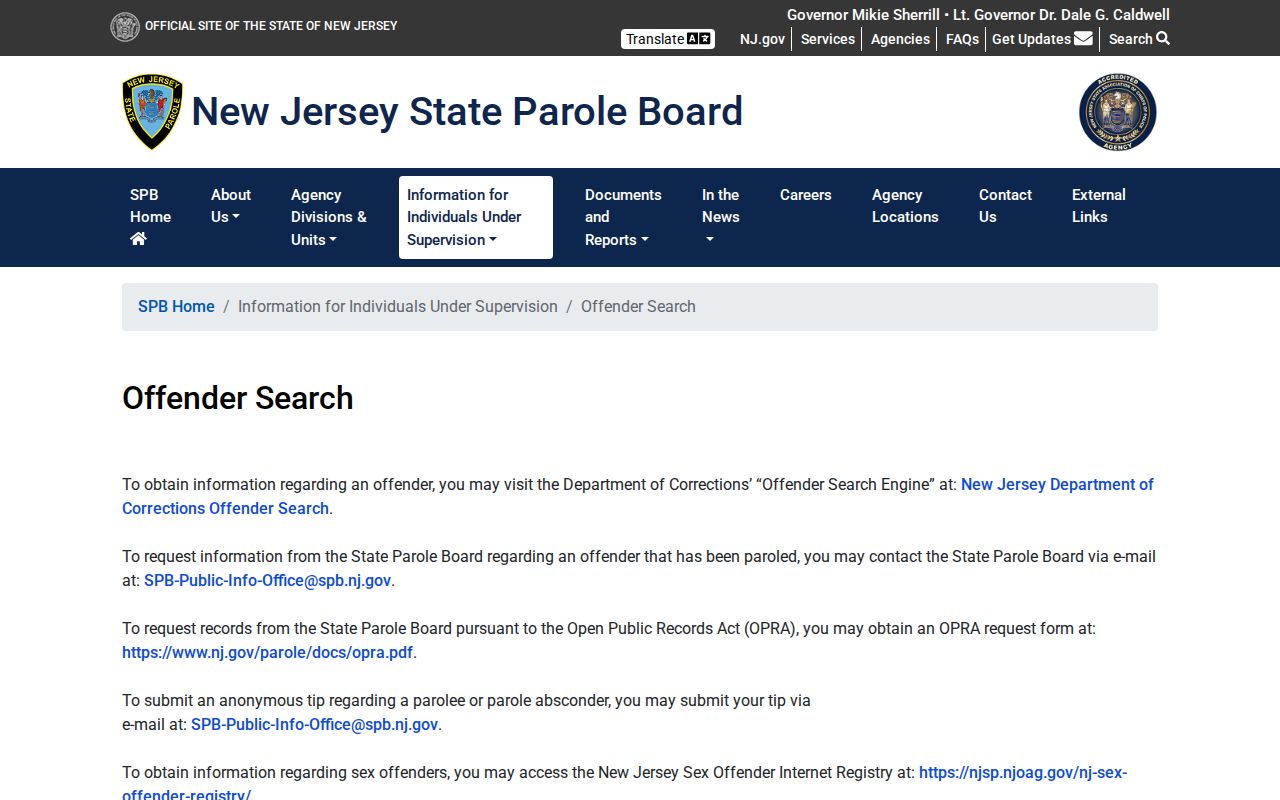
This split helps a searcher avoid using a parole-status channel to infer whether a Monmouth County registry profile should be public.
New Jersey Registration Levels and Requirements
Registration is generally for life in New Jersey, while tier governs the scope of notice. Verification usually occurs once each year. Specified serious categories verify every 90 days. The faster verification schedule does not automatically define a person's tier, and the tier does not create a set duration of 15 or 25 years.
| New Jersey Tier | Risk and Notification | Duration and Internet Effect |
|---|---|---|
| Tier 1 | Low risk; law-enforcement notification | Generally lifetime registration and no public Internet listing |
| Tier 2 | Moderate risk; notice to law enforcement and qualifying schools, care providers, camps, and organizations likely to encounter | Generally lifetime registration; eligible profiles may be published subject to exclusions |
| Tier 3 | High risk; broader notice to members of the public likely to encounter | Generally lifetime registration with Internet publication and broad notification |
An eligible registrant may petition Superior Court under N.J.S.A. 2C:7-2(f) after 15 offense-free years measured from conviction or release, whichever is later, and must prove they are not likely to threaten others. Statutory exclusions apply. The petition route is not an automatic end date.
Monmouth Registry Verification Schedules
Annual and 90-day verification are reporting schedules, not search filters. They help authorities confirm required information, but a public user may see only the fields approved for Internet disclosure. A recent verification also does not freeze the address or status for the rest of the year.
For community awareness, return to the official interface when details matter. Saved images and copied lists age quickly. If an address appears wrong or a listed status causes concern, contact law enforcement with the profile details and the observed issue. Do not attempt a personal check-in, stakeout, or confrontation.
Keep the search narrow and fact-based. Record the official profile URL and the time it was checked when reporting a possible mismatch. A local agency can compare those public details with registration information that the Internet portal does not expose. That is more reliable than trying to resolve a status change through old search results or posts shared by others.
Note: Tier, verification frequency, Internet publication, and parole supervision are four distinct legal facts and should be read separately.
Reporting Registry Noncompliance in Monmouth
Suspected registration noncompliance belongs with local law enforcement or the Monmouth County Prosecutor's Office. Provide the official profile, the location or fact that prompted concern, and a clear account of what was observed. Let the agency compare that report with confidential registration and court information.
For an urgent threat, use emergency services. For a nonurgent issue, the police department serving the location or the prosecutor can direct the report. The Monmouth County Sheriff's Office at 2500 Kozloski Road, Freehold, can route sheriff-related questions through its main line at 732-431-6400, but the official state registry and the relevant local enforcement agency remain the correct sources for status verification.
Community Notification and Lawful Use
Megan's Law allows public information to support safety planning and community awareness. Notification differs by risk tier and by who is likely to encounter the registrant. Internet notice is only one form of notice, so the website list should not be treated as a full roster of every person who registers in Monmouth County.
Use current facts. Never publish assumptions, add labels the official profile does not use, or infer a new offense from an address change. The registry itself is the record to verify, while police and prosecutors investigate compliance.
Misuse is a crime: New Jersey Megan's Law, N.J.S.A. 2C:7-1 et seq., forbids using registry information to threaten, intimidate, or harass a registrant or household.
Community notice does not authorize vigilantism or confrontation. Report a concern and allow trained officials to decide whether the facts show a violation.